You cross over the Dry Red & Ochre Hills and descend to a country of lagoons and channels - feats of ancient engineering swallowed by luxuriant growth and centuries of silt.
This was where the nameless Necropolis Culture flourished. Swallowed up by the very conditions that allowed it to rise and thrive.
The seasons are Misty, Flood, Hot, and Rainy - in whatever sequence you like best.
The Tower of the Astromancers is the only remaining intact structure that can be identified at a distance and with any certainty. It's importance to the Necropolis Culture (and those trying to plunder it) may simply be survival bias. But it was definitely somehow significant.
The Grand Necropolis is speculative, but firmly fixed in minds and on maps (though not its specific location).
1. Roll d6:
- Killer Mud Pigs (1-3): Dire/Prehistoric Capybara, size of a Hippo and equally bad-tempered. Its mud-clogged fur foils infravision, just like in the documentary, Predator (1987).
- Sentinel Crabs: ubiquitous; about the size of a dog; shells make cheap, short-lived shields. Signal to each other with rhythmic claw clicking, gathering in greater, louder and more intimidating numbers around whatever their current interest. Normally non-aggressive, scavengers and opportunists.
- Skims: ray-like creatures look like floating mats of weed until they take to the air. Big ones can completely envelop you; small ones are like hairy leeches. Possibly intelligent.
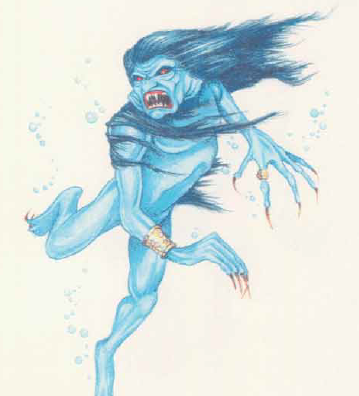
- Grindylows: Velya to the Croglin Vampire; ghastly clutches of them trapped in shallow pools, whispering for blood and darkness. Coughing cries ring out and are answered during the misty season, as they reminisce and plan for swarming during flood season.
- Big Sleek Rats: predatory otters. May have ghoulish habits and taint from slithering through the tombs and scavenging the resting undead. 1 on d12 they’re Ghoulish Weres.
- Banshee Caterpillar (1): named for its distinctive whinnying scream; colonised by bioluminescent animalcules; entrapping web strands; adhesive spit. Eventually burrows into the earth to pupate. No one knows what the adult form is, how long the gestation, nor total numbers waiting to hatch.
2. Roll d6:
- Greasy Cormorants: nosy, noisy, gluttonous. Will flock your camp to snatch your dinner, and any loose shiny things into the bargain. Defensive and malicious projectile regurgitation and defecation.
- Giant Catfish (1): can haul/hurl its bulk out of water and over solid ground - survives several hours out of water. Possibly delicious, mostly harmless, can swallow you by accident. 1 on d6 it’s capable of speech and wisdom (or a reskinned Aboleth).
- Vicious Otters: aggressive and territorial, otherwise common otters. Local lore ascribes them human intelligence and powers of mimicry, if not of actually being shapeshifting witches.
- Psionic Squid: if you’re immune to their abilities, they are quite sad-looking grey squid. Otherwise appear to be arabesque fractal peacocks with an infinite array of Mandelbrot tentacles. They’re learning to communicate with other lifeforms, but hampered by short lifespan, demanding breeding cycle, lack of transmissible culture. They’re not sure whether to make friends or take over the world.
- Gross Bitterns: stout, dodo-like swamp birds. Communicate and defend themselves with infrasound.
- Lord Verdigris (1): colossal golem, still running on an apparently eternal power source; programmed to ceaselessly patrol the region, but nothing seems to occur that provokes a response. Infrequently dashes off swathes of heliograph messages to the distant Tower of the Astromancers.
3. Roll d6:
- Terror Crane (1-3): Colossal nomadic wading birds. Incapable of flight. Criss-cross the delta, leaving a trail of incidental destruction and the empty shells of giant marsh clams.
- Amber Golems: undead-android dinosaur/lizard-folk; guardians and soldiers of the Necropolis Culture, they follow ancient orders but could be reprogrammed. No one living knows the secret of their construction.
- Thrif (Death Leeches): elemental anemone-urchins that spawn in places with heavy necromantic fetor. Animate alien-plant-animals absolutely loaded with dark mana. Respond instinctively to stimuli; casually lethal.
- Shellycoats (Troll Gnomes): remnants of the Necropolis Culture's summoned slaves. Articulated hides clatter and ring. Agonisingly fused into glassy stone by the sun’s rays. Most are small because they don’t get the nutrition or leisure to get big.
- Mist Drakes: chirruping vaporous things that coil out of the saturated air during the hottest, most humid days. Ephemeral and elemental, superstition holds them to be the ghosts of those who die in and near the Grand Necropolis.
- Dragon Turtle (1): often mistaken for an island or undiscovered ruins, the Dragon Turtle is one the ancient spirits of the land, and you can only interact with it when it inhales, turning time back to when this was nothing but shallow sea. You've got until it breathes back out to interrogate it and to survive the aquatic dinosaurs and Serpent People mariners.
4. Roll d6:
- Graveyard Crabs (1-3): tottering giant crabs rumoured to have grown huge on a diet of ancient corpses, but just the natural end of the Sentinel Crab lifecycle - they have grown too big, too fast and cannot sustain the necessary feeding and shedding. They go to ancestral grave sites, where - amidst great drifts of fragile, demineralised remains - they topple over and die. That’s where they’re heading when encountered.
- Scum Creepers: slimy animate tubers that prey on weak and/or sleeping animals. Actively inedible.
- Flame Dead: Necropolis Culture undead, wreathed in unearthly flames. Appear either as flickering perpetually offended versions of their living selves, or shrieking candle-wax skeletons. Distant processions of will-o-wisps are said to be Flame Dead pacing the walls of the Grand Necropolis.
- Grendels/Fomorians: monstrous remnant of the Necropolis Culture; Thouls led/championed by Troll-Ghasts and ruled by Sea Hags (all reskins). Mortality horribly stretched, they require life energy (levels, ability scores) to maintain mental stability.
- Punkies: halfling-like swamp folk; their lives do not look that attractive from the outside, and considered no better than Goblins by surrounding settled peoples. At least some of them take grim pleasure in decoying biggers into danger; at least some of them eat those they trick.
- Rusty Derelict (1): counterpoint to Lord Verdigris; decomposed, predatory golem; lubricated with fat, blood hydraulics, and motivated by captured brains. Necromantic engine the likes of which has not been seen before. Haunted.
5. Roll d6:
- Algal Mummies: weak to air and poison/pollution. Dreamy and meditative, they have become solipsistic druidic monks. Confined to algae-choked flooded tombs, they see through the web of life and animate water-plants to intervene in the breathing world. Think they are the undead remnant of a named individual but really the vehicle of a weird organism.
- Fungoid Mummies: ornate and bursting with cordyceps-antlers; style themselves as the ultimate form and true inheritors of the Necropolis Culture. Cordial relations with the Mi-Go. Think they are the undead remnant of a named individual but really the vehicle of a weird organism.
- Gunpowder Beetles heavy and slow; packed with tomb nitre and alchemical waste, warmed by necromantic radiation. Attacked or surprised, they produce a loud crack and a spark of utter darkness (blinding on the mortal sphere, visible on the Astral Plane) accompanied by the stench of brimstone and necrotic damage. Can be harvested and processed.
- Widow Elves: bereft across centuries, forever mourning long dead mortals. The Necropolis Culture apparently did a brisk marriage business with similarly lost and forgotten Elfish nations, and these grief-mad lamias (and quite probably thousands of fey-blooded ancestors) are all that remain. At least equivalent to your basic Drow in abilities and equipment.
- Giant Marsh Clams: can you justify a stat-block? Basically, bear traps you can eat and use the shell as a low-quality shield. 2 on 2d6, they’ve been feeding on Psionic Squid for generations and are capable of levitation and mind blast.
- Dinosaur Ghosts: elementals and thought-forms that pile up in the sky, or loom vast from the mists. Terrifying, spectacular, mostly harmless. Abruptly real when the Dragon Turtle inhales.
- Lord of Fevers (1): gargantuan processional crustacean-centipede, supported by filmy wings grouped on nodes along its length. Emanations of blast-furnace gut cause radiation sickness. Probably a Larvae of the Outer Gods. Festooned with extra-dimensional parasites. Mostly out-of-phase with the material world; solidifies during Mist season.
- Pazuzus: wiry, rangy, black manes and feathered wings; refugee demons from the bottom of the pecking order; melancholic because escape has cut them off from the Great Murmuration, choleric because they prefer significantly less earth and water in their environment.
- Hippogriffs: beaked and scaly croco-wolves; prefer lonelier hunting grounds as the mammalian predators soundly out-compete them in their niche. Their long-term survival as a species is in doubt, but prolonged by their feeding cycles being measured in months (even seasons) rather than days/hours.
- Necromancers: apart from the sartorial distinction, they might be any other adventuring party exploring the wilderness. Roll d6: 1 turning undead and not by choice; 2 frosty but non-aggressive; 3-4 untried entry-levels; 5 in possession of something worth taking, whether you know it or not; 6 much too powerful for you to go toe-to-toe.
- Mi-Go: maybe no more than a small away team across the whole region. Roll d8: 1 following the Lord of Fevers at a worshipful distance; 2 buzzing around the Tower of the Astromancers; 3 observing Lord Verdigris at a respectful distance; 4 taking samples and measurements from Rusty Derelict; 5 retrieving Shellycoat remains with extendable pincers; 6 vacuuming Mist Drakes into compression tanks; 7 containing Thrif in energy bubbles; 8 attempting to communicate with you.
- Sabre-tooth Woolly Mosquitoes: immortal relicts of what came before the Necropolis Culture. Torpid for millenia, cocooned in something resembling fossilised tree resin; bumbling and mindless through lack of proper regular nutrition, still digesting prehistoric meals from animals long extinct. 3 on 3d6 there's a single Brood Queen waking from torpor, monstrously gravid with parasitic larvae, and capable of reviving the species. For stats, start with a Stirge.